
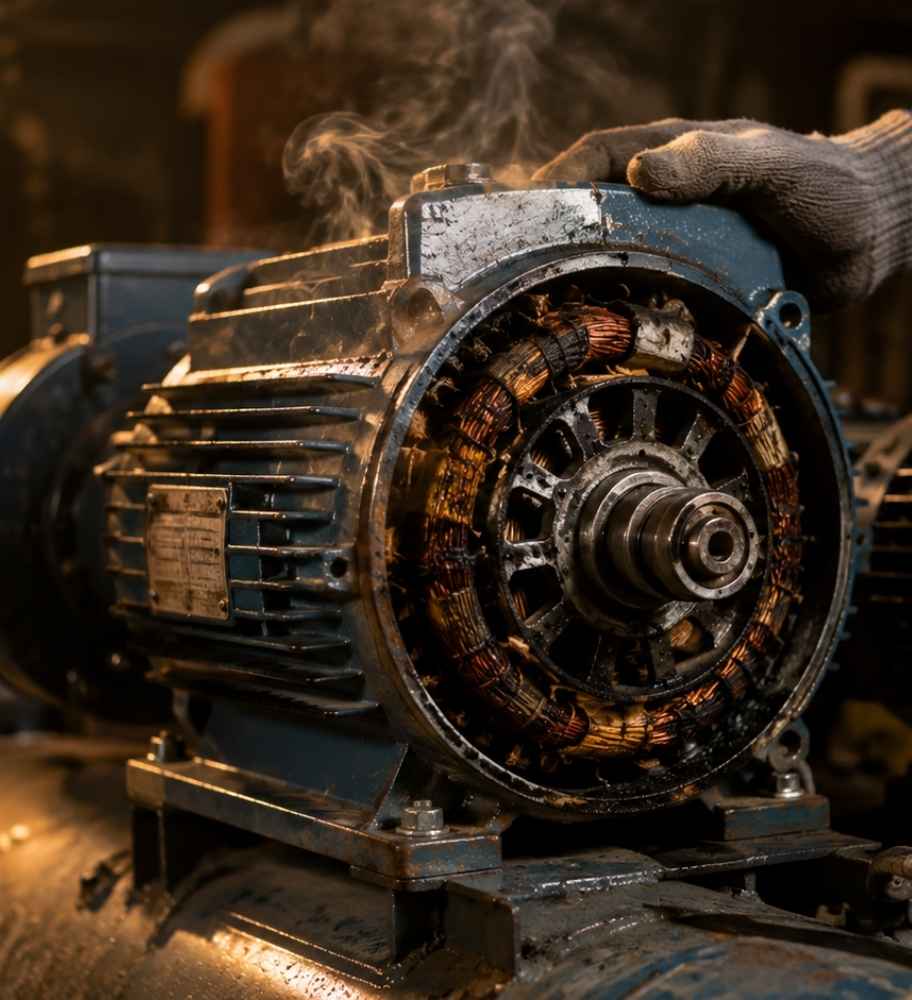
If your air compressor has stopped working, the motor is one of the first places to look. Understanding the most common air compressor motor problems helps you spot trouble early, avoid expensive breakdowns, and know when it is time to call a professional. From a motor that hums but will not start to one that overheats and cuts out repeatedly, these issues almost always have a clear cause — and in most cases, a clear fix. In this guide, the team at Electro Rewinds — Tasmania’s motor repair specialists since 1974 — breaks down the problems we see most often, what causes them, and what to do about them.
An air compressor motor works hard. It starts under load, runs at high speed, and often operates in dusty, hot, or demanding environments. Over time, this takes a toll on the motor’s components — its windings, bearings, capacitors, and insulation all gradually wear.
Most compressor motor failures come down to one of a few root causes: electrical faults, worn components, overheating, or simply age. The good news is that the vast majority of these problems are repairable — often quickly and affordably — if caught early enough. Here are the most common air compressor motor problems and what is behind each one.
This is one of the most common compressor motor complaints. You switch the compressor on, you hear a humming sound, but the motor shaft does not turn. The usual culprits are:
A failed start capacitor — the most common cause by far. The capacitor provides the initial torque needed to get the motor spinning. When it fails, the motor can only hum.
A seized bearing preventing the motor shaft from turning freely.
A winding fault inside the motor affecting its ability to generate torque.
The good news is that a failed start capacitor is usually a quick and very affordable repair — one of the most common fixes our technicians carry out.
If your compressor runs for a period of time then shuts off, restarts once it cools down, and repeats this cycle, the motor is overheating and tripping its thermal overload protection. Common causes include:
Damaged or partially shorted windings drawing excess current and generating heat.
Worn bearings creating excessive friction inside the motor.
Poor ventilation — a dusty, clogged, or blocked motor cannot dissipate heat effectively.
Overloading — running the compressor beyond its rated duty cycle.
Overheating is serious. Repeated thermal cycles progressively damage the winding insulation and can lead to a complete motor failure if left unaddressed.
When a compressor motor repeatedly trips the circuit breaker or blows fuses, it almost always points to an electrical fault — such as a short circuit in the windings or a breakdown of the winding insulation. This is both a performance issue and a safety concern. It needs professional inspection and should not be ignored.
If the motor appears to run normally but the compressor takes much longer than usual to fill the tank, or cannot reach its rated pressure at all, the motor may be losing torque. This is often caused by a failing run capacitor or partially damaged windings that reduce the motor’s effective power output.
Unusual noises coming from the motor area are almost always a bearing problem. Grinding and screeching typically indicate worn or failing bearings. Excessive vibration alongside noise can also point to a damaged rotor or loose motor mounting. Bearings are an inexpensive component to replace when caught early — but if ignored, a failed bearing can damage the rotor, the windings, and the motor shaft.
A burning smell is a serious warning sign that demands immediate action. It almost always means the winding insulation is breaking down due to overheating or an electrical fault. If you notice a burning smell from your compressor motor, switch the unit off immediately. Continuing to run it risks a complete winding burnout — which would require a full motor rewind to fix, at significantly higher cost.
In the vast majority of cases, yes — compressor motors can be professionally repaired. At Electro Rewinds, we repair compressor motors for all types of compressors across Tasmania — from small workshop air compressors to large industrial units. Common repairs include capacitor replacement, bearing replacement, winding repairs, and full motor rewinds.
Repairing your compressor motor is almost always more cost-effective than buying a replacement compressor — and our qualified technicians in Launceston will give you an honest assessment of whether repair is the right call for your situation before any work begins.
This is most commonly caused by a failed start capacitor, which provides the torque needed to start the motor. A seized bearing or winding fault can also be responsible. A capacitor replacement is usually a quick, affordable repair.
Overheating is usually caused by damaged windings, worn bearings, poor ventilation, or running the compressor beyond its rated duty cycle. Repeated overheating is serious and should be professionally inspected before it leads to complete motor failure.
Yes. In most cases, professional compressor motor repair — including rewinding burnt windings, replacing capacitors, and renewing bearings — is far more cost-effective than buying a replacement compressor.
Yes. Switch the compressor off immediately. A burning smell means the winding insulation is breaking down, and continuing to run the motor risks complete burnout and potential fire hazard.
Most compressor motor repairs at our Launceston workshop are completed within 3 to 5 business days depending on the fault and parts availability. Capacitor replacements can often be completed same day.
Understanding the most common air compressor motor problems — from a humming motor that will not start to overheating, tripping breakers, and burning smells — means you can act early and keep repair costs low. Most of these faults are repairable when caught in time. If your compressor motor is giving you trouble anywhere in Tasmania, do not wait for a complete breakdown. The experienced team at Electro Rewinds has been repairing compressor motors for Tasmanian homes, farms, and businesses since 1974 — get in touch with our Launceston workshop today for a free, honest quote.