
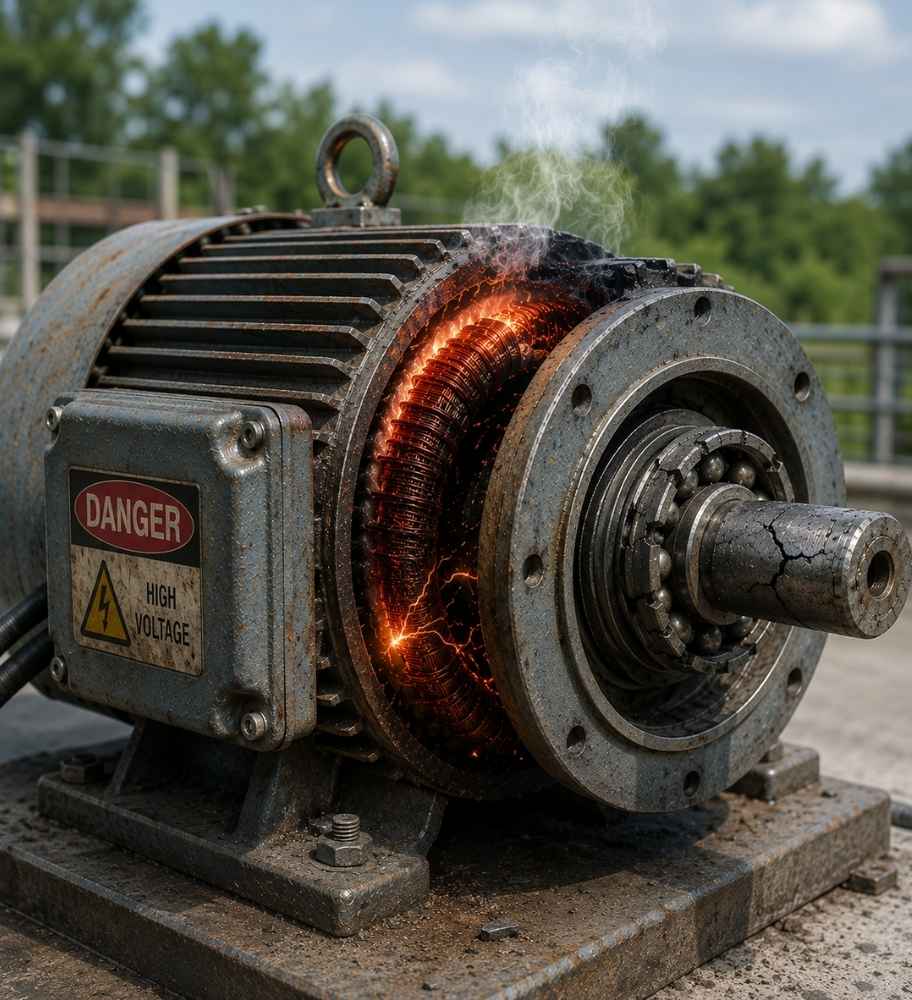
Recognising the early signs your electric motor needs repair can save you hundreds of dollars and prevent a complete, costly breakdown. Electric motors rarely fail without warning — they almost always give off clear signals before they stop working entirely. Whether it powers a pump, a workshop tool, an industrial machine, or a household appliance, catching these warning signs early means a faster, cheaper repair. In this guide, the team at Electro Rewinds — Tasmania’s trusted motor specialists since 1974 — explains the seven most important warning signs to watch for.
A small motor fault left unaddressed can quickly turn into a complete motor burnout. What starts as a worn bearing or a failing capacitor — a relatively cheap, quick fix — can escalate into burnt windings or total motor failure, which is far more expensive to repair or may require full replacement.
By learning to recognise the early signs of motor failure, you can act before the damage spreads. This is the single best way to keep your repair costs low and your equipment running reliably. So what should you look out for?
One of the earliest and most obvious signs of a motor problem is unusual noise. A healthy motor runs with a smooth, consistent hum. If you start hearing grinding, rattling, screeching, or knocking sounds, it usually points to:
Bearing problems are best caught early — a worn bearing is a cheap fix, but if ignored, it can cause the motor shaft to seize and damage the windings.
A motor that vibrates more than usual is telling you something is wrong. Excessive vibration can be caused by:
Beyond signalling a fault, excessive vibration also accelerates wear on other components — so it is worth addressing quickly.
If your motor runs hotter than normal, or keeps tripping its thermal cutout and shutting off, overheating is a serious warning sign. Common causes include:
Overheating damages the winding insulation over time, which eventually leads to a complete winding failure. If your motor is running hot, it needs professional attention.
A burning smell coming from your motor is one of the most serious warning signs — and you should stop using the motor immediately. This smell almost always means the winding insulation is breaking down due to overheating or an electrical fault.
If the windings burn out completely, the motor will need a full rewind. Acting at the first hint of a burning smell can be the difference between a simple repair and a major one.
If you switch on your motor and it hums but the shaft does not turn, this is a classic symptom of:
A failed capacitor is often a quick, affordable repair — but running a humming motor for too long can cause further damage, so switch it off and get it checked.
If your motor runs but cannot reach full speed, struggles under load, or produces less power than it used to, it is losing efficiency. This can be caused by:
Reduced performance not only affects your equipment’s output — it also means the motor is drawing more current and wearing out faster.
If your motor repeatedly trips the circuit breaker or blows fuses, there is almost certainly an electrical fault inside the motor — such as a short circuit in the windings or an insulation breakdown. This is both a performance issue and a safety concern, and it should be inspected by a qualified technician without delay.
If your motor is showing one or more of these warning signs, the best thing you can do is have it professionally inspected as soon as possible. A qualified technician can carry out a full diagnosis, identify the exact fault, and recommend the most cost-effective solution.
In most cases, early intervention means a simple, affordable repair rather than a major rebuild or full replacement. If you are in Tasmania, the team at Electro Rewinds offers expert electric motor repair for all types and sizes of motors — from our Launceston workshop, serving the entire state.
Yes. A noisy motor is usually caused by worn bearings, which can be replaced quickly and affordably if caught early. Ignoring the noise can lead to more serious damage.
No. A burning smell indicates the winding insulation is breaking down. You should switch the motor off immediately and have it inspected to avoid a complete burnout or fire risk.
This is most commonly caused by a failed start capacitor, a winding fault, or a seized bearing. A capacitor replacement is often a simple, affordable fix.
Regular inspection, keeping the motor clean and well-ventilated, avoiding overloading, and addressing early warning signs promptly are the best ways to extend the life of your motor.
Knowing the signs your electric motor needs repair puts you in control — you can act early, keep repair costs low, and avoid the disruption of a complete breakdown. From unusual noises and vibration to overheating, burning smells, and tripping breakers, every one of these signs is your motor telling you it needs attention. If you have noticed any of them, don’t wait for a total failure. The experienced team at Electro Rewinds has been keeping Tasmania’s motors running since 1974 — get in touch with our Launceston workshop today for expert advice and a free repair quote.